
The Complete Air Conditioning & Home Cooling Guide
A comprehensive guide to maintaining, repairing, and purchasing your home’s air conditioner or heat pump.
You rely on your air conditioner or heat pump to keep your home cool and comfortable all summer long. In this guide, we provide tips on how to get the most life out of your system, how to keep your monthly utility bills in check, what to do when your system isn’t working and what to look for when purchasing a new system. Our goal is to help you and your family get back to enjoying the comfort of your home as soon as possible.

Types of Cooling Systems
- Air Conditioner
- Central Air Conditioner
- Ductless Air Conditioner
- Portable Air Conditioner
- Window Air Conditioner
- Heat Pump
- Central Air Source Heat Pump
- Ductless Air Source Heat Pump
- Central Ground Source Heat Pump
Air Conditioner
How does an Air Conditioner work?
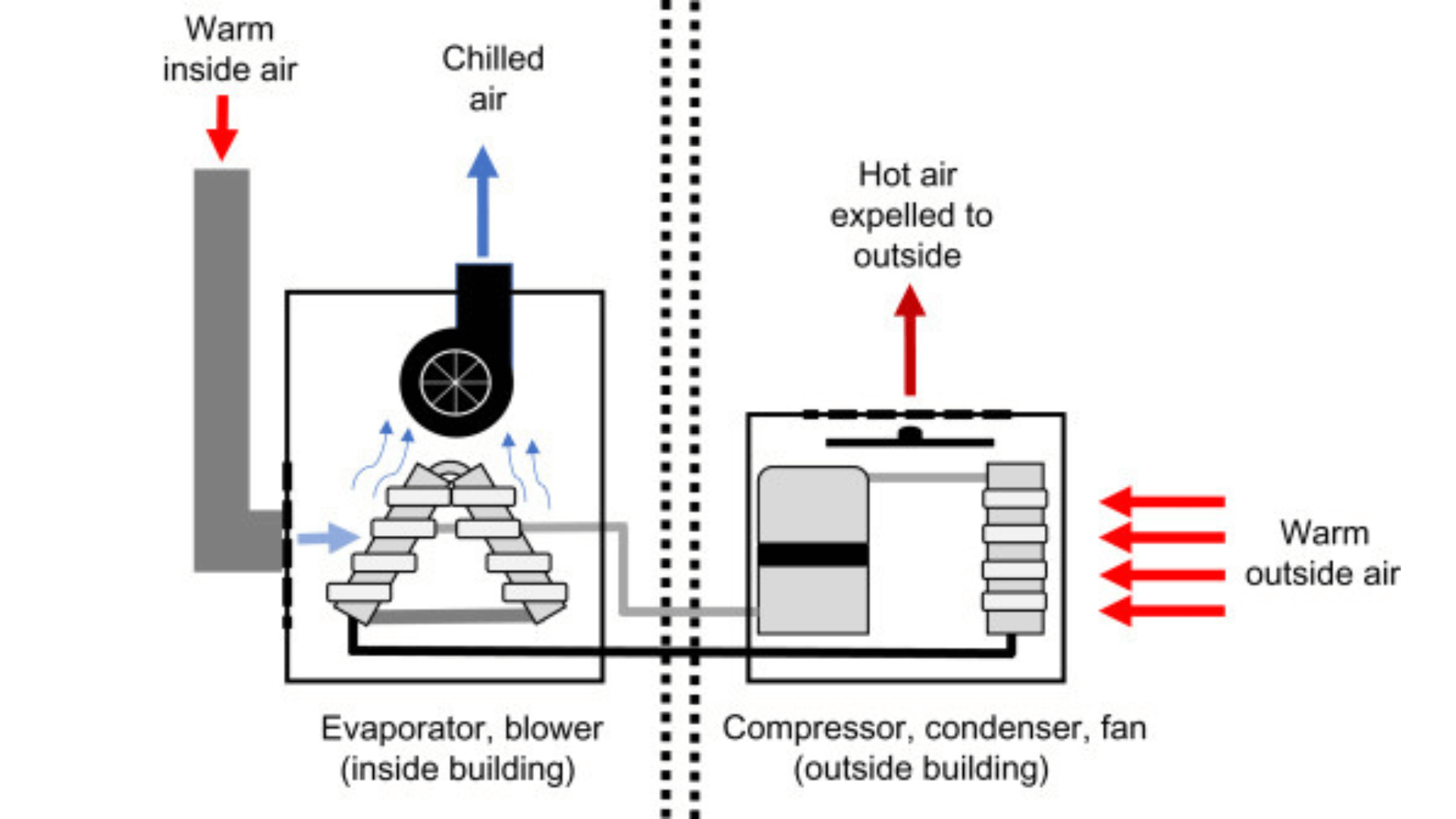
An air conditioner works by removing heat and moisture from the air inside a room or building, and transferring it outside. As seen in the diagram below, the compressor, condenser and fan are what make up the outdoor air conditioning unit, whereas the evaporator and blower are located inside the home and connected by refrigerant lines to the unit outside. If you have a furnace installed in your home the air conditioner and furnace will typically use the same blower to circulate air through the home.
Cooling Process Step by Step:
- The compressor pumps hot refrigerant gas from the evaporator coil inside to the condenser coil outside.
- As the hot refrigerant gas moves through the condenser coil, it loses heat to the outside air and becomes a liquid.
- The cold refrigerant flows into the home and through the evaporator coil.
- As warm air from the room is blown over the evaporator coil, the refrigerant absorbs the heat from the air and turns back into a gas. The moisture in the air also condenses on the cold evaporator coil and is collected in a drain pan.
- The cooled and dehumidified air is then blown back into the room through the ducts, while the hot refrigerant gas is pumped back outside to the condenser coil to start the process all over again.
- This cycle of compression, condensation, expansion, and evaporation continues until the desired temperature and humidity level is reached in the room or building.
What Air Conditioner do I need?
There are several factors to consider when looking for the air conditioner that best fits your home, including the size and age of your home, your existing HVAC equipment, the climate you live in, your comfort needs, and your budget. Below we introduce you to the basics however, a trained HVAC professional will be able to conduct a thorough assessment of your home using a cooling load calculation and provide you with options for equipment that fit your home.

TIP:
Bigger isn’t always better when it comes to AC units. If your air conditioner is too large for your home’s needs it will switch on and off quickly instead of running in long efficient cycles. This will shorten the equipment’s lifespan and drive up utility bills. Conversely, a unit that is too small won’t be able to effectively cool your home. This is why it’s key to get equipment properly sized for your home.
Types of Air Conditioners:
- Central Air Conditioners are designed to effectively cool an entire home using the ducts to distribute cool air throughout the building. They are the most effective air conditioner to maintain a consistent temperature between rooms and should be installed in any home that has the ductwork to support it.
- Ductless Air Conditioners are also called ductless heat pumps – Read more below.
- Portable Air Conditioners can be easily moved from room to room and do not require permanent installation. They typically consist of a single unit that is designed to sit on the floor and vent hot air out of a nearby window using a hose or duct. Portable air conditioners are often used in situations where a permanent installation is not practical, such as in apartments or rental homes where modifications are not allowed. They can be a convenient and cost-effective option for cooling a single room or small space and do not require professional installation.
- Window Air Conditioners are mounted in windows or in wall openings. They work by drawing in warm air from the room, passing it over a cooling coil filled with refrigerant, and then blowing the cooled air back into the space. As with portable air conditioners they are often used in situations where central air conditioning is not available.
Heat Pump
What is a heat pump?
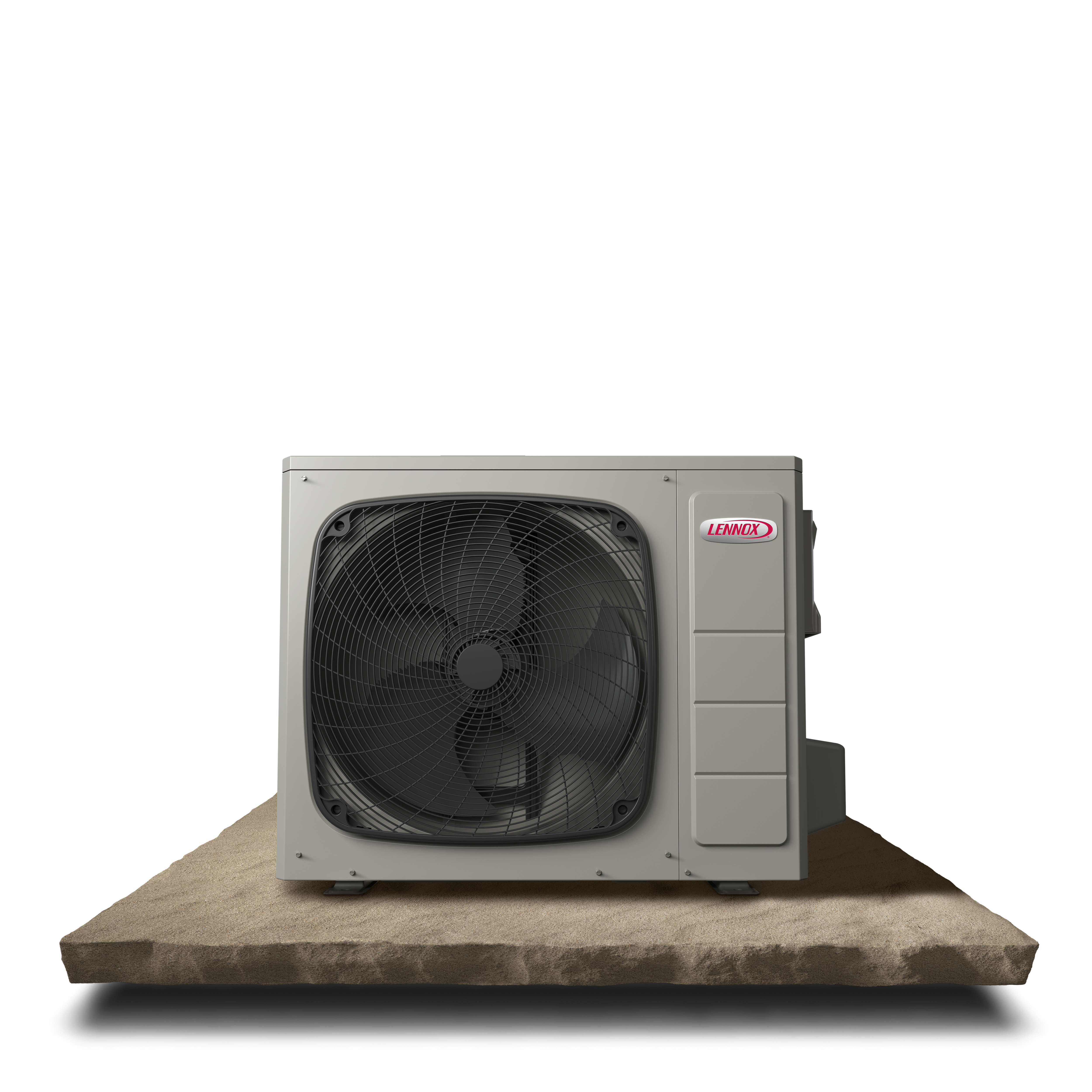
A heat pump is an energy-efficient, electric HVAC system that can both heat and cool your home. In Canada, heat pumps are rapidly gaining popularity due to recent technological advancements. The appearance of a central air source heat pump (ASHP) is similar to that of a standard central air conditioner however it is installed on a stand rather than on the ground to allow for the liquid discharge and to avoid ice issues in the winter. With the ability to provide both heating and cooling, a heat pump is an excellent investment for those looking for a cost-effective and environmentally friendly HVAC solution.
How does a heat pump work?
Instead of producing cold or hot air as a furnace does, heat pumps simply transfer heat from one location to another. In the summertime, similar to an air conditioner, the heat pump extracts heat from your home’s indoor air and releases it outside. In the winter, however, the heat pump can reverse this process and extracts heat from the air or ground outside of your home and move it inside.
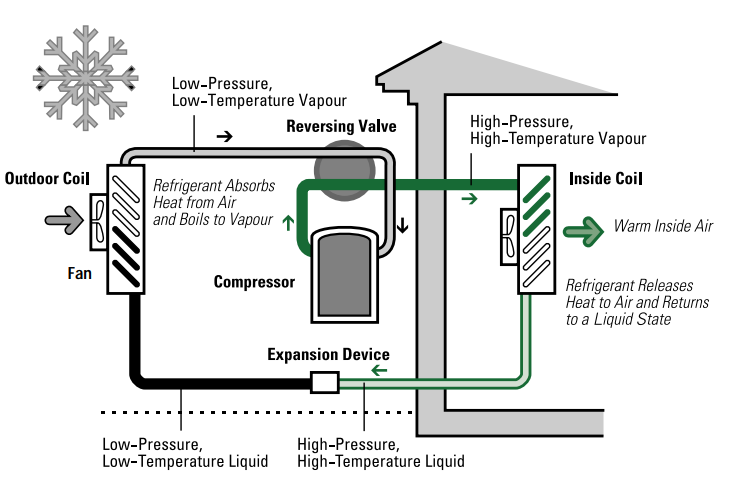
Types of heat pumps:
The two main types of heat pumps are air-source heat pumps and ground-source heat pumps also known as geothermal heat pumps.
- An air-source heat pump (ASHP) transfers heat to and from the air outside your home. They are currently the most common type of heat pump used in Canada because they are easy to install in urban areas.
- A ground-source heat pump (GSHP) is also called a geothermal heat pump or a geothermal system. These systems transfer heat to and from the ground outside your home, surprisingly even in cold temperatures the ground holds onto a significant amount of heat. Ground-source heat pumps work by circulating liquid through an outdoor loop made up of pipes. This can either be a closed-loop system or an open-loop system that ties into the water table. Loop construction, while long-lasting, requires excavation, and a good amount of ground space. Accordingly, geothermal heat pump systems are most commonly found in rural settings. Despite their high initial cost, geothermal systems can’t be beat and offer the highest efficiency of any heating or cooling system having been shown to be 65% cheaper to run than electric furnaces and returning 10-20% more savings than even air-source heat pumps!
Ductless Heat Pumps:
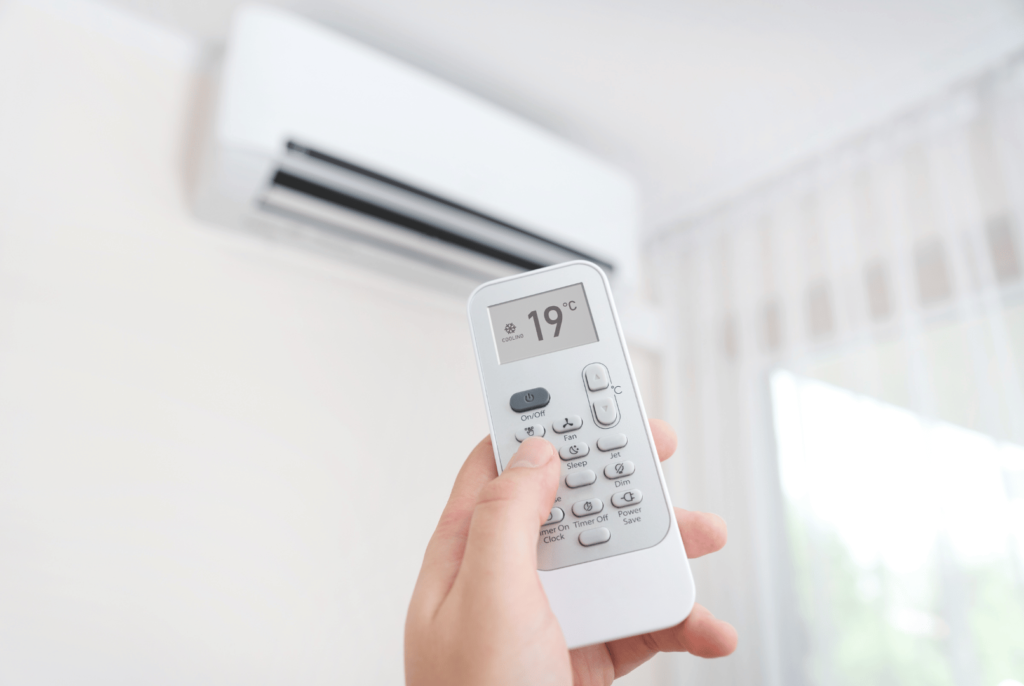
Heat pumps typically circulate air through a home’s ductwork however, there are also ductless heat pump options available. In ductless systems, air passes from an outdoor unit to one or more indoor units which are mounted to the wall or ceiling. They do not distribute the cooled air as evenly as a centrally ducted system can, but are a great option when installing ductwork is not an option or is cost-prohibitive to install.
Hybrid Heat Pump Systems:
If you live in a cold climate, but are still interested in a heat pump, a hybrid system is a great solution. – Learn more in our heating guide.
Should I replace my AC with a heat pump?
If you’re in the market to replace your air conditioner you should consider a heat pump, as the incremental cost to switch is often quite low. An HVAC professional will be able to assess the exact needs of your home and advise you on the best fit for your home, but generally speaking, heat pumps have one big advantage over air conditioners: government rebates.
Currently, the Canadian government is pushing to move more homes to electric in an effort to fight climate change. They have created the Canada Greener Homes Grant to help homeowners afford these energy-efficient retrofits. By replacing your air conditioner with a heat pump you could qualify for rebates. Walker Home Services has already helped many homeowners leverage these grants to their full potential. Contact us to learn how we can do the same for you!
Buying vs Renting
Whether it’s a new air conditioner, heat pump or furnace, one of the biggest decisions you’ll have to make when buying new HVAC equipment is whether to buy or to rent. Here at Walker Home Services we firmly believe that buying the equipment is always the best option for the homeowner. Many companies tote the benefits of rental without mentioning that financing and maintenance plans are still an option without rental. Let’s take a look in more detail at why you’ll want to consider purchasing your equipment when it’s time to replace.
Spend Less
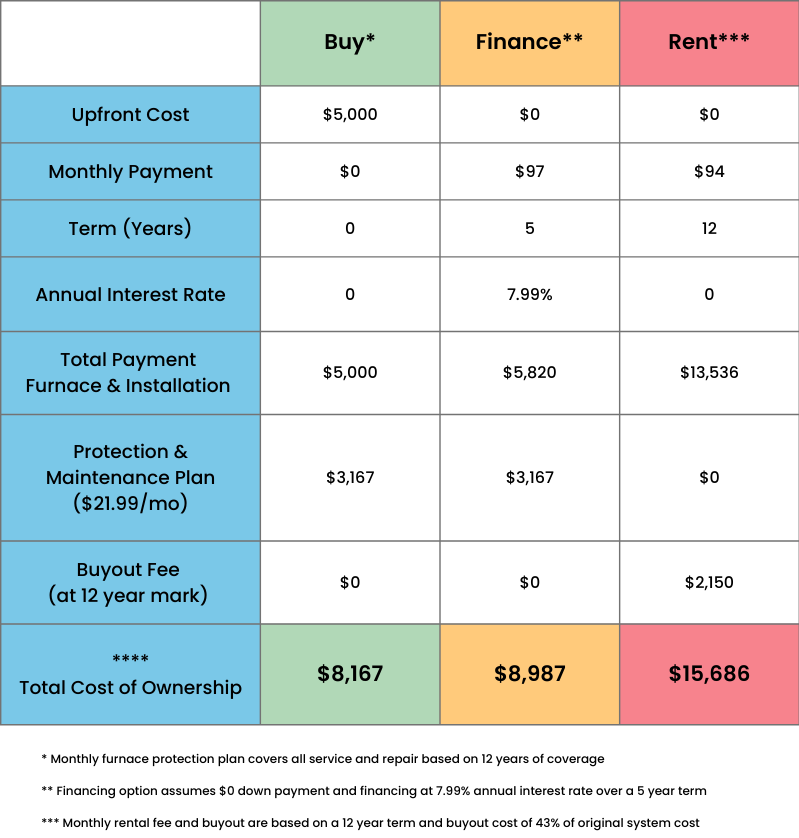
In the chart above we compare the cost of buying a $5,000 (CAD) air conditioner outright, to financing an AC, and to renting an AC. When you look at the total cost of ownership over the entire lifespan of the equipment (conservatively estimated as 12 years) you can see that renting ends up being 40% more expensive than buying! Actual prices will vary depending on the equipment you choose and the HVAC company you work with, but time and time again we see customers overpaying for their equipment on rental plans.
Same Maintenance Benefits
When you rent, the promise is that you don’t have to pay for the maintenance of your system, however, purchasing a maintenance plan from your local contractor provides this same service and generally for less. In the example in the chart above a protection and maintenance plan was factored in for all 12 years of the system’s lifespan and it is still almost half that of renting. When you buy your equipment you will also get a warranty. A good warranty should cover parts for 10 years and even longer in combination with a maintenance plan.
Financing Options
Another reason renting is attractive to many customers is the ability to make small payments over time instead of having to spend a lump sum. However, the benefit of affordable monthly payments is not exclusive to renting. Many HVAC contractors offer financing options. The difference is that financing allows you to pay off the equipment one month at a time until you own your equipment, whereas rental payments continue on for the entire lifespan of the equipment and can increase year after year.
In the example above you can see that financing is more expensive than buying outright due to the interest acquired over the period that the system is being paid off. With that said, there are still significant savings when compared to renting, especially since many homeowners pay off their equipment in less than the 12 years represented in the example above. Fees and interest rates will vary based on equipment and HVAC contractor but in all cases, we find similar results. – Learn more
Buyouts
If you decide you want out of your rental contract at any time, you will generally have to pay a buyout fee which is a percentage of the original value of the system. In the example above we’ve assumed that the customer wants out of their rental contract after 12 years of use. Even after so many years, it is very common to have to pay a large percentage of the original cost in order to own your equipment.
Increase the value of your home
Owning your equipment adds to the value of your home and also simplifies the process of selling your home. No need to worry about transferring the rental contract onto the next owners or deal with rental buyouts if no one wants to take over your contract.
Take advantage of government rebates
Renting severely limits, and in some cases completely excludes, your ability to take advantage of government rebates. For example, with the Canada Greener Homes Grant you could save up to 7100$ on a qualifying heat pump. – Learn more
How to find a reputable HVAC company
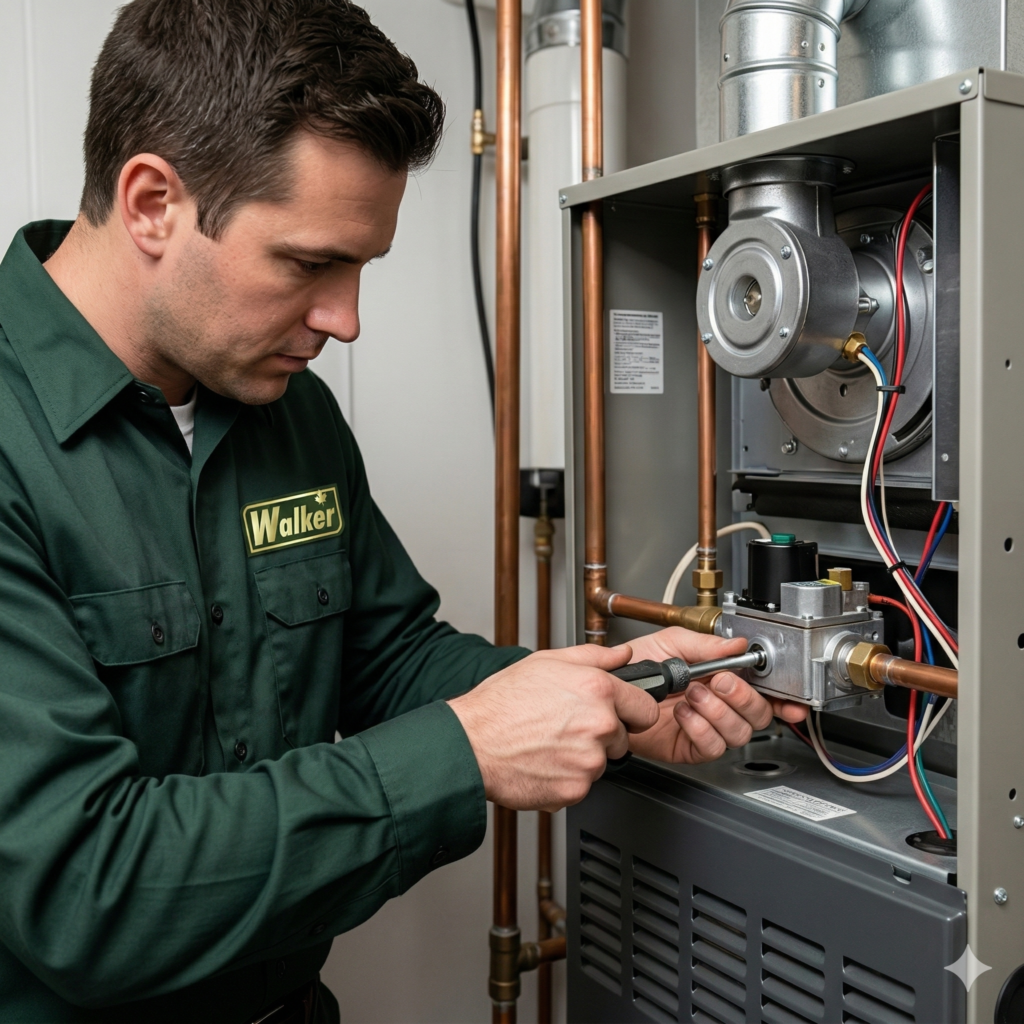
The quality of the installation matters just as much as the quality of the equipment being installed. It won’t matter if you purchase a high-end HVAC system, if it is installed poorly it will not function as intended. That’s why it’s so important to thoroughly vet any HVAC contractor coming to your home. The following steps will help you identify who to trust with your home comfort needs.
- Look at reviews: The best reviews are those that come from your friends and family. Ask around to see who the trusted businesses in your area are. It’s also helpful to look at online ratings such as Google Reviews and HomeStars.
- Look for experience: Choose a company that has been in business for a while and has a track record of providing quality services.
- Check if they’re local: A local contractor will always be able to get to you quickly and understands the HVAC needs of your area.
- Check for licensing: Make sure the HVAC company you choose is following all the licensing requirements of your area. In Ontario, each technician should have a TSSA G2 or G1 license (for working with gas appliances) and ideally a 313 Air Conditioning Mechanic or Refrigeration license if they’re working with an air conditioner or heat pump. Many companies will operate with only one certified technician and a team of uncertified technicians working for them. You want to ensure that the tech coming to your home is fully certified so you’re getting the most educated and capable staff looking after your system’s reliability and safety!
- Do they offer in-person consultations: The best HVAC professionals will be able to come to your home and assess your situation holistically. With this information, they will be able to provide you with the best advice possible based on your needs, preferences, and budget. This should always include a proper heat loss/gain analysis.
- Check their emergency service hours: If you have an emergency, it’s not always going to happen during a convenient time. Is your contractor available to help in the evening? On weekends? What about holidays? And if they are, will they charge you a premium for service during these times? Get answers to these questions in advance rather than waiting until an emergency.
By following these guidelines, you can find a reputable HVAC company that will provide you with quality services and peace of mind.
How to maintain your HVAC system
Cleaning and maintaining your cooling system is a task often overlooked by homeowners – you maintain your car, so why not your HVAC system? All mechanical systems require tune-ups to operate as intended. Regular maintenance not only helps to improve reliability and prevent costly repairs but can actually save you money by making sure the system is running as efficiently as possible and prolonging its life. Additionally, in many cases, maintenance is required by the manufacturer to keep the warranty valid.
A maintenance plan from a reputable HVAC company is a great option for many homeowners. They provide peace of mind that your heating and cooling systems will function efficiently through all seasons for years to come, protect your warranty and protect you from costly repairs. Maintenance plans also generally come with lucrative savings in the form of discounts to homeowners, as ethical contractors want to incentivize their clients to protect their investments and mitigate the risk of requiring emergency service for preventable issues. – Learn more
Repair or Replace
Most air conditioners and air source heat pumps carry a parts warranty of 5-10 years and a well-maintained system can last for 12-15 years. As the equipment ages, repairs become more common and the efficiency of the machine may no longer be optimal compared to newer models, increasing utility costs. A trained HVAC professional will be able to advise you on if the best decision for your home and wallet is to repair or replace. Below we’ll go through some of the major points to consider when making this decision.
Replacing your air conditioner or heat pump will cost more upfront than repairs, but will result in equipment that is more reliable, requires less repairs over time, and is more efficient (lower utility costs).
Repairing your air conditioner or heat pump costs less than replacing the whole system, it’s also generally a quicker process. If you’re looking at an expensive repair ask your contractor if the repair will prolong the life of your equipment or if another repair will be needed quickly. In which case replacing might be a better investment.
Thermostats
Should I get a Smart Thermostat?
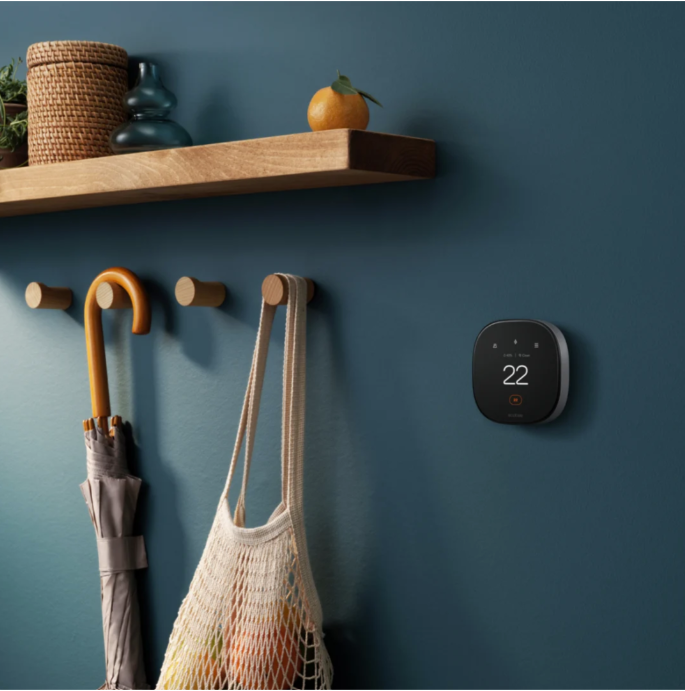
The biggest question when it comes to thermostats is whether to get a standard thermostat or a smart thermostat. There are so many smart stat options available on the market now that there is something that fits every home, and there’s no real reason to miss out on the benefits that they offer.
What are the Benefits of a Smart Thermostat?
- Smart thermostats can learn your temperature patterns and will adjust the temperature accordingly, like running the AC less often when you leave the house. Some also employ room sensors to accomplish this, allowing you to use less energy and save more on utility costs!
- Control your home’s temperature from your phone. This can be convenient when you’re home as the perfect temperature is just a click away. It is also very reassuring when you’re away from home, allowing you to keep an eye on your home’s temperature.
- Get alerts to your phone if your home rises above a certain temperature. This is especially important for those who leave their pets alone at home during the day in the summer.
- Programming schedules is a breeze with a smart thermostat thanks to your smartphone’s bright, colourful touchscreen interface. Doing this with an older thermostat is often more time-consuming and requires finding and using the manual. These schedules ensure your home is set to your comfort level, and you can save energy when that’s not needed.
- Provides a record of usage so you can track and manage your consumption.
Dehumidifiers
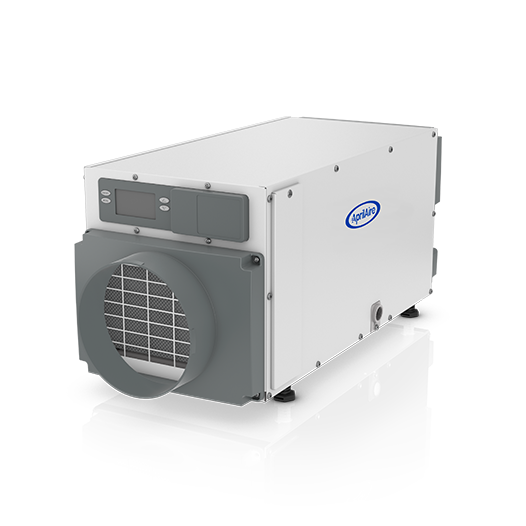
If you have trouble keeping your home cool in the summer no matter how low you set the thermostat it may be due to the relative humidity of your home. The humidity level not only affects your comfort but also the health of your family and of your home. If you notice any of the following problems your home is likely too humid.
How to know if you need a dehumidifier:
- Musty odours
- Condensation on windows, walls, or other surfaces
- Mold and mildew growth
- Warping or buckling of wood floors, doors & windows
- Congestion, allergies, respiratory issues or asthma flair-ups
Types of Dehumidifiers:
- Air Conditioners & Air Source Heat Pumps – A central air conditioner naturally acts as a dehumidifier by removing excess moisture as it cools the air. If you already have an air conditioner and are still experiencing high humidity in the summer it’s a sign that your AC might not be functioning as it should and it’s time to get it serviced before looking into other dehumidifier options.
- Central Dehumidifier – If you don’t have an air conditioner a central dehumidifier is likely the best option for your home. By using your HVAC system’s existing ducts a central dehumidifier is able to remove excess moisture evenly across all rooms in the home.
- Portable Dehumidifier – If your home doesn’t have ductwork, a portable dehumidifier can be used to remove excess moisture from the air. However, this is only effective at treating one room at a time and should really only be used for small apartments.
Air Filters
What is an air filter?
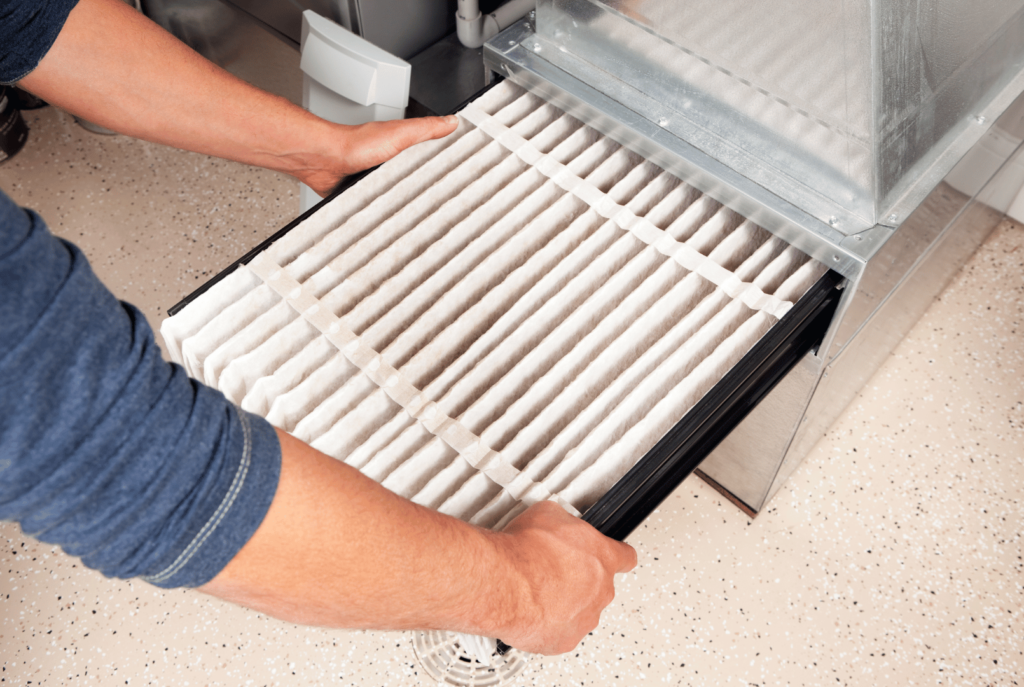
Did you know that the filter that is attached to your furnace is used during the cooling season as well? This is possible because your air conditioner relies on your furnace’s blower motor to circulate air throughout your home. If you don’t have a furnace the filter will be located inside your home in your air handler. Just as it’s important to change the filter during the winter it’s equally important to change in the summer. In fact, having a clogged filter is one of the number one reasons for AC failure.
When do I replace my filter?
Over time the filter accumulates dust and other particles from the air stopping them from circulating around your home. If you hold your filter up to the light and can’t see light through it, it needs to be changed. When the filter is full your system has to work harder to blow air through it decreasing the efficiency of your system, decreasing the expected lifespan of your system and increasing your monthly bills. Changing your filter regularly will improve the air quality in your home and the efficiency of your HVAC system. Every home is different and factors like the presence of pets or renovations can mean you need to change your filter more often. The type of filter you use also has a big effect on its lifespan, more on this below.
DIY TIP:
If you’re having issues with your HVAC system the first thing you should check is your filter. This one simple, low-cost task can fix a plethora of HVAC issues, but many homeowners aren’t even aware that they should be changing their filter regularly.
What size air filter do I need?
The filter must fit snugly in the filter rack, if it is not airtight it will not function as intended. Common sizes range from 1’’ to 5’ in width, thicker filters tend to last longer as they have more surface area with which to catch particles and often filter the air more efficiently than thin filters.
What MERV rating do I need for my air filter?
The Minimum Efficiency Rating Value, or MERV, is an index of the efficacy of your filter media. The higher the MERV rating, the smaller the particles it is able to capture. Your lungs have a MERV 8 rating so you want to ensure your HVAC system can filter more than your lungs or they’ll be absorbing everything your filter misses! A MERV rating between 10 and 13 is generally recommended however, if you struggle with environmental allergies you may want to put a stronger filter in.
Years of Experience
5-Star Reviews
Homes Cared For
Community Donations
How We work
Easy Scheduling
Call, text, or book online. We make it simple to get on the schedule fast. We’ll confirm your appointment time and keep you updated every step of the way.
Pre Arrival Communication
Before we arrive, you’ll receive a heads-up with your technician’s name, photo, and arrival window. No surprises. No guessing who’s showing up.
Thorough Inspection
We don’t guess, we diagnose. Your technician will complete a full system evaluation to identify the root cause of the issue (not just the symptom).
Clear Options & Pricing
You’ll receive upfront pricing and multiple repair or replacement options. We explain everything in plain English so you can make the best decision for your home and budget.
Expert Service, Done Right
Once approved, we get to work. Our technicians follow proven processes to ensure the job is completed safely, efficiently, and to the highest standard.
Follow-Up & Peace of Mind
We stand behind our work. After the job, we follow up to ensure everything is working perfectly, and we’re always here if you need us.
What our Customers Say
Posted on Google
 Cheryl Neufeld
Trustindex verifies that the original source of the review is Google.
First appointment: unprepared and confused plumber.. rescheduled with a different set of plumbers and SUCCESS..done we quickly and efficiently.Posted on Google Roger ClaudeThe technition was good and clean and politePosted on Google
 Nameless Nameless
Trustindex verifies that the original source of the review is Google.
Every experience i have with different departments at Walker is always good! Highly recommendPosted on Google Larry MarshallOk, nice guy but when professional is written on the truck one expects all appropriate tools are brought in for the job. The customer should not be required to remind the tech to remove the condensate drain from the neutralizer to avoid blocking it with carbon being flushed from the combustion chamber. An adjustable wrench is not appropriate for a 10mm nut. Over the cleaning of the boiler was ok. I have dropped Walker , unprofessional and untrained techs.Posted on Google
 James AultHave been great to us since 2008 when we switch to geothermal.
Get in touch
Walker Home Services – Cornwall
Walker Home Services – Morrisburg
Walker Home Services – Brockville